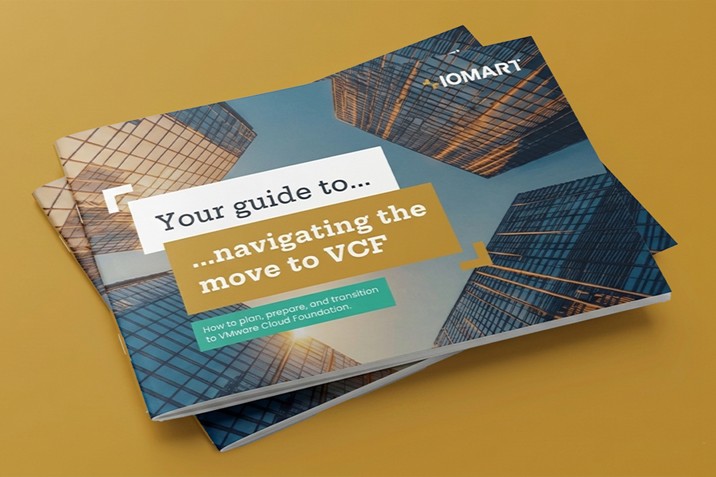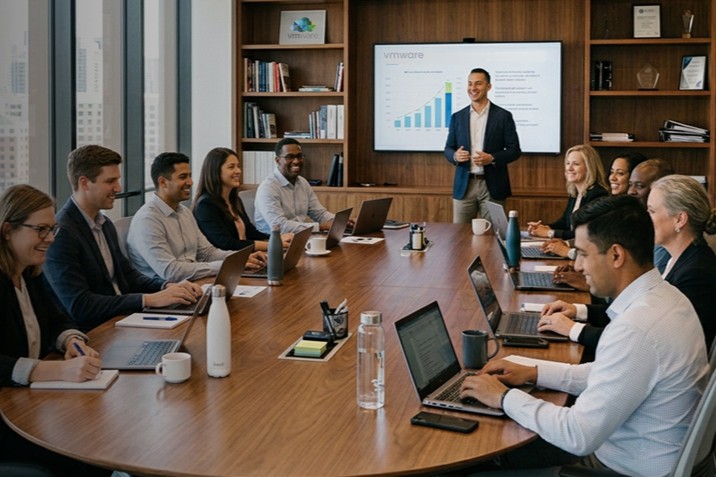
Book a VMware Workshop
Gain clarity on your VMware exposure, future options and next steps.
By Guy Martin, Cloud Services Product Manager, Iomart Group
Published Date: 13/03/2026
Category: Cloud Services
Read Time: 5 minutes
VMware is changing – and for many organisations, the real concern isn’t the technology itself, but what those changes mean for their people.
Behind every VMware environment is a team that’s spent years building expertise, refining operating models, and keeping critical services running. That investment has delivered real value: stability, resilience, and confidence in systems the business relies on every day.
So when organisations start looking at VMware’s changing direction, an important question usually follows:
What does this mean for our people?
This article is for organisations that want to move forward, but not at the expense of the teams, skills, and experience that got them here.
Since Broadcom’s acquisition of VMware, organisations have seen changes to licensing, product structure, and platform direction. VMware Cloud Foundation (VCF) is now positioned as VMware’s single strategic platform.
Much of the conversation has focused on the technology, but what’s often overlooked is the human impact.
Most IT teams aren’t struggling with capability. They’re struggling with pressure, uncertainty, and a sense that decisions are arriving faster than the space to make them.
Teams already understand their VMware environments in detail. They know where risk is, how to manage it, and how to keep services stable, often while balancing day-to-day operations at the same time.
The issue isn’t capability. It’s decision fatigue.
As VMware moves towards VCF, it naturally raises questions:
These concerns are valid. And they’re exactly why a calmer, more structured approach to modernisation matters.
Modernising VMware in the Broadcom era will involve real change, whether that means rearchitecting to a VCF platform design or moving certain workloads to other environments.
But that doesn’t mean organisations need to replace the teams, skills, or operational knowledge they’ve built.
For many organisations, the next step is simply understanding what VCF introduces, what it will take to get there, and how teams can transition without being expected to learn an entirely new technology stack overnight.
In many cases, existing VMware expertise is still a strong foundation. Teams can build on what they already know rather than starting again with something completely different – unless moving to an alternative platform forms part of a longer-term strategy.
The goal isn’t to replace people. It’s to give them clarity, confidence, and a roadmap that lets them move forward at a manageable pace.
A sustainable modernisation strategy usually starts with a simple principle: not every workload needs to move at once, but every workload will need a supported long-term home.
Some workloads are stable, well understood, and can remain where they are for now as part of a phased transition, particularly if the immediate priority is aligning or upgrading the underlying VMware platform.
Others may have dependencies that make moving them too early risky. In some cases, they’re already being managed effectively by in-house teams with mature processes and operational confidence.
At the same time, some applications may benefit from the capabilities VCF introduces, or from public cloud platforms, hybrid operating models, or enhanced security and automation.
Taking time to assess this properly, rather than reacting quickly to licensing changes or lifecycle deadlines, allows organisations to plan carefully, protect their teams from unnecessary pressure, and modernise at a pace that people can realistically support.
When in-house skills are lost, the impact goes far beyond training budgets.
Confidence in operational decision-making drops. Incident response slows. Organisations become more dependent on external support. And knowledge that’s been built up over years can quietly disappear.
By contrast, modernisation that builds on existing VMware expertise helps preserve continuity, as demonstrated by Uniserve's move to a future-ready VMware platform. It reduces delivery risk, supports morale and retention, and creates a stronger foundation for future platform evolution.
That’s why the most successful VMware transitions treat skills as something to carry forward – not something to leave behind.
During periods of uncertainty, the partner that organisations choose to work with can make a real difference.
As a VMware Pinnacle Partner, Iomart works alongside organisations as they navigate VMware’s evolving landscape. The aim isn’t to replace in-house teams, but to support them – providing guidance, additional capacity where needed, and operational support that helps organisations move forward safely.
That means starting with advice rather than action, planning changes in a phased and evidence-led way and helping teams build confidence in new capabilities such as VMware Cloud Foundation over time.
The focus is on protecting existing investment, not just in technology, but in people and skills, while helping organisations prepare for what comes next.
The biggest risk to in-house skills isn’t modernisation itself. It’s being forced to act late.
When lifecycle deadlines or licensing changes dictate the pace of decisions, organisations are far more likely to make rushed and high-risk choices – often under pressure from time, cost, or operational concerns.
Early, advisory-led planning changes that dynamic.
It gives teams space to:
That breathing room can make the difference between reactive disruption and controlled, thoughtful change.
Modernising VMware doesn’t have to mean starting again.
For most organisations, the real goal is continuity, confidence, and control.
That means recognising the investment already made in people and skills, making change deliberate rather than reactive, and choosing platforms and strategies that support both the business and the teams responsible for running it.
The organisations navigating VMware change most successfully understand something important:
This isn’t just a technical challenge. It’s a human one too.
If you’re navigating VMware change and want clarity without pressure, Iomart’s VMware Future State Workshop is designed to help.
It provides a clear view of upcoming VMware lifecycle and licensing changes, an assessment of current exposure and risk, and practical options for what comes next, including paths to VMware Cloud Foundation and broader cloud strategy and hybrid approaches.
Most importantly, it helps organisations begin planning in a way that prioritises people, skills, and operational stability.
If you’re thinking about how to modernise VMware while protecting your team’s expertise and operational confidence, our VMware planning resources can help you assess your options and build a roadmap that works for you.
Because when change can be understood and planned properly, organisations can move forward without leaving their people behind.
Get in touch to start the conversation.
Modernising VMware doesn't have to mean rushed decisions, large-scale disruption, or leaving valuable in-house expertise behind. Whether you're ready to assess your options, explore a practical planning framework, or see how another organisation approached its VMware future state, these resources can help you move forward with confidence.
Gain clarity on your VMware exposure, future options and next steps.
See how VMware modernisation improved stability and performance.